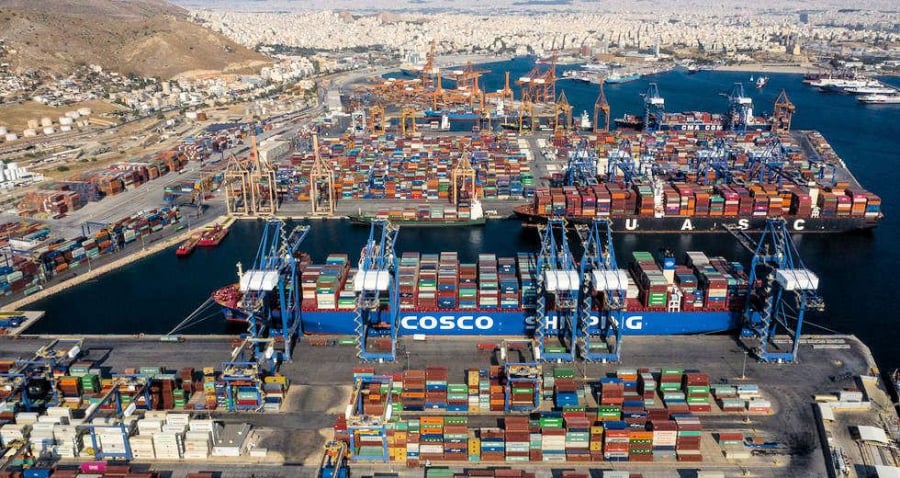
The Greek government has initiated efforts to pressure COSCO Shipping, the Chinese company managing the Piraeus Port Authority (PPA), to upgrade the port’s passenger infrastructure and enhance services for travelers while improving the overall functionality of the city of Piraeus. This initiative, led by Minister of Maritime Affairs and Insular Policy Vasilis Kikilias, marks the first significant push by a Greek administration since COSCO acquired a majority stake in the PPA in 2016.
The move comes as Greece seeks to solidify its strategic role in the India-Middle East-Europe Economic Corridor (IMEC), a multimodal trade initiative, which may require extracting COSCO from Piraeus to align with the corridor’s geopolitical and economic objectives.
Kikilias has already conveyed the government’s expectations to the Chinese Ambassador to Greece, Fang Qiu, during a meeting at the Ministry of Maritime Affairs on Akti Vasiliadi. Sources from the ministry indicate that the minister emphasized the urgent need for COSCO to undertake critical investments in the port’s passenger facilities “without delay.” These upgrades, which could be implemented swiftly and at a relatively low cost, are expected to yield significant benefits for both travelers and the broader Piraeus community.
Proposed improvements include water supply projects, WiFi access, the construction of additional passenger terminals, canopies, safety infrastructure, and enhanced timetable information services. “During the peak summer season, when thousands of vehicles and tens of thousands of passengers use the port daily, the situation is unbearable,” ministry sources stated, highlighting issues such as inadequate shading, air conditioning, cleanliness, and safety measures.
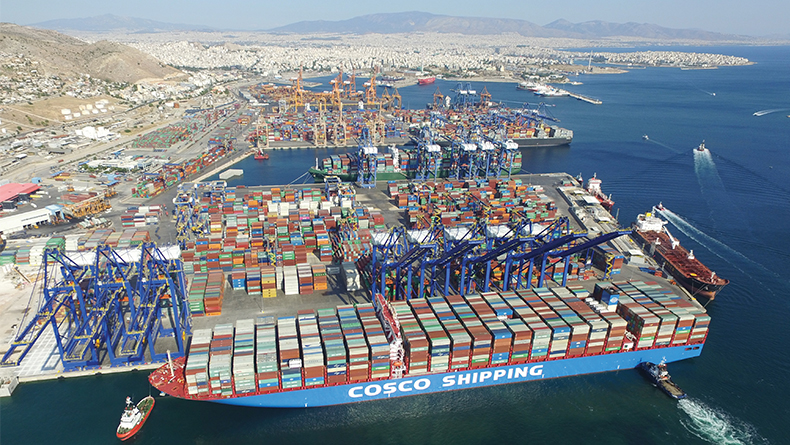
The Greek government’s renewed focus on the Piraeus Port stems from the lack of substantial improvements in passenger infrastructure over the past nine years, despite COSCO’s increased docking fees and charges imposed on ferry and cruise operators. Since acquiring a 67% stake in the PPA by 2021, COSCO has transformed Piraeus into a vital transshipment hub in the Mediterranean, with the port reporting a 5% increase in turnover to €230.9 million and a 30.8% rise in net profits to €87.4 million in 2024, alongside cash reserves of €204.5 million.
However, government sources argue that these financial gains have not translated into meaningful enhancements for the port’s passenger operations, which remain outdated and insufficient to meet current demands.
The push for modernization also aligns with the broader goal of improving the quality of life in Piraeus, a priority long championed by the local municipality. Following his meeting with the Chinese ambassador, Kikilias is scheduled to meet with Piraeus Mayor Yiannis Moralis, a non-executive member of the PPA’s Board of Directors, to further discuss the port’s modernization. A subsequent meeting with the PPA administration is expected before Holy Week, during which the government is likely to demand specific commitments for infrastructure upgrades.
Greece’s strategic positioning in the IMEC, which aims to connect India, the Middle East, and Europe through key hub ports like Piraeus, Haifa (Israel), and the Red Sea Gateway Terminal (Saudi Arabia), adds another layer of complexity to the situation. Piraeus, as the largest port in Eastern Europe, is poised to play a central role in facilitating trade and regional integration under the IMEC framework.
However, COSCO’s control over the port has raised concerns among U.S. officials, who blacklisted the company in January 2025 over alleged ties to China’s military, citing potential risks to NATO and EU security interests. To fully integrate into IMEC and balance its economic ties with China, Greece may face pressure to reduce or eliminate COSCO’s influence in Piraeus, requiring careful diplomatic navigation to maintain its strategic and economic objectives in the region.