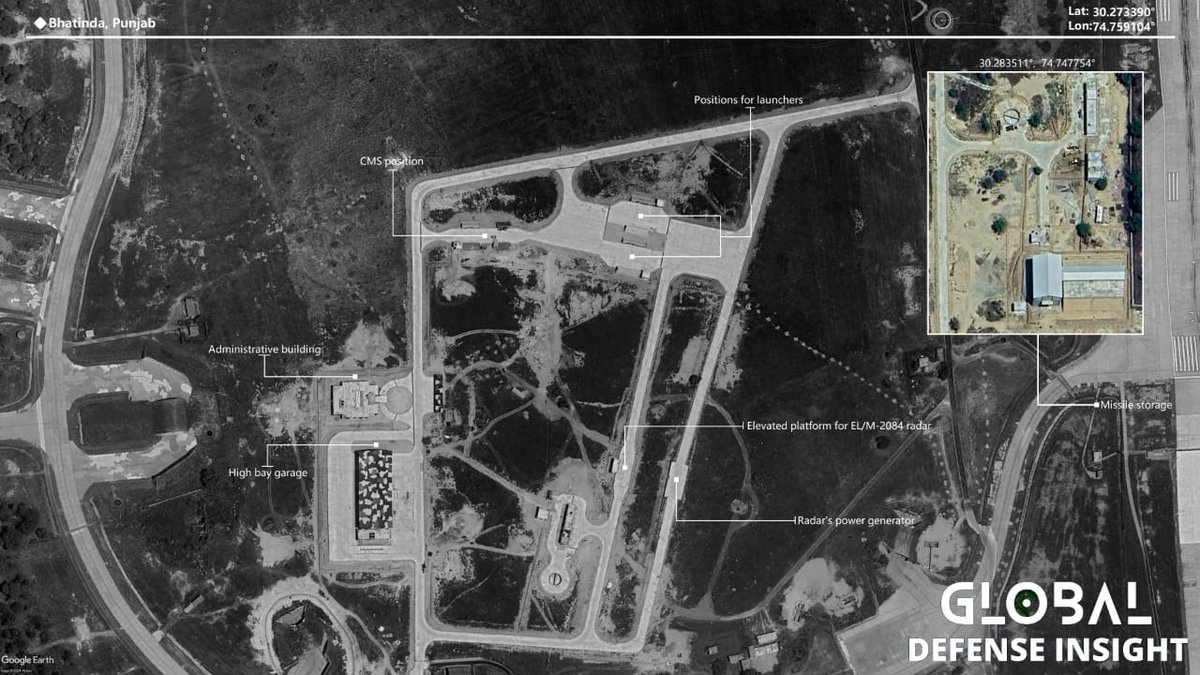
The Indian Air Force (IAF) has recently deployed the Barak-8 surface-to-air missile system, also known as the Medium Range Surface-to-Air Missile (MR-SAM), at its Bhatinda Air Force Station in Punjab, located near the border with Pakistan. This strategic move, identified through new satellite imagery analyzed by open-source experts, underscores India’s ongoing efforts to strengthen its air defense capabilities amid heightened regional tensions, as DefenceBlog reported.
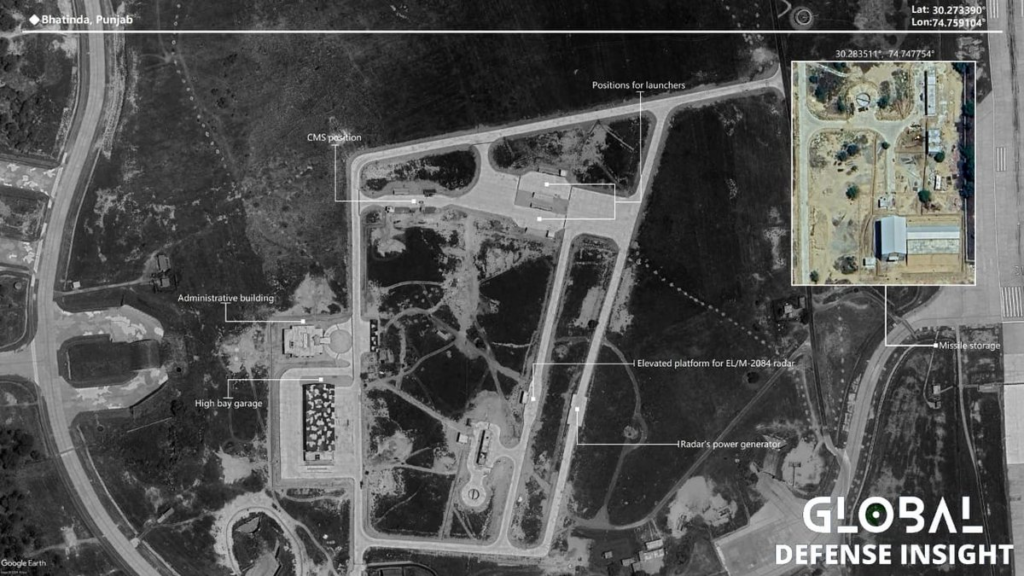
According to the analysis, the satellite imagery reveals newly constructed infrastructure at the Bhatinda base, including missile launch positions, radar ramps, and dedicated storage facilities. The standardized configuration of these assets suggests a permanent or long-term deployment rather than a temporary forward presence, indicating a deliberate enhancement of the IAF’s defensive posture in the region.
The Bhatinda Air Force Station, one of India’s largest air bases in Punjab, houses fighter squadrons and critical support infrastructure, making it a pivotal asset in the country’s northwestern defense framework.
The Barak-8 system, a collaborative development between India’s Defence Research and Development Organisation (DRDO) and Israel Aerospace Industries (IAI), is designed to intercept a wide array of aerial threats, including aircraft, unmanned aerial vehicles (UAVs), and cruise missiles. With a length of 4.5 meters, a weight of 275 kg, and a 60 kg warhead, the Barak-8 is a formidable component of India’s air defense arsenal, capable of engaging targets at medium range with high precision. Its integration into both IAF and Indian Army formations highlights its versatility and importance in India’s multi-tiered air defense strategy.
The deployment at Bhatinda places the Barak-8 system within rapid interception range of Pakistan’s eastern military installations, significantly enhancing India’s ability to counter potential aerial threats from across the border. This move also strengthens the air defense umbrella over the Bhatinda base, ensuring greater protection for its critical assets.
The IAF has not issued an official statement regarding the deployment, but the satellite imagery aligns with a broader trend of expanding Barak-8 coverage across India’s northern and eastern sectors. At least 13 Barak-8 batteries are now operational at various locations along the borders with Pakistan and China, reflecting a strategic response to persistent regional challenges.
India’s focus on bolstering its air defense infrastructure has intensified over the past three years, driven by ongoing border tensions with both Pakistan and China. The Barak-8 system, with its advanced capabilities, forms a key layer in India’s evolving defense architecture, complementing other systems and enhancing the country’s ability to safeguard its airspace. The deployment at Bhatinda is a clear signal of India’s commitment to maintaining a robust and proactive defense posture in a geopolitically sensitive region.
As India continues to expand its Barak-8 network, the system’s role in deterring aerial threats and protecting strategic assets will likely remain a cornerstone of its national security strategy, ensuring a stronger and more resilient defense against potential adversaries.