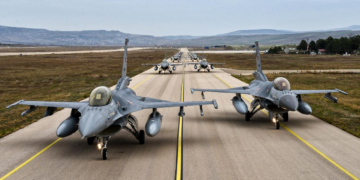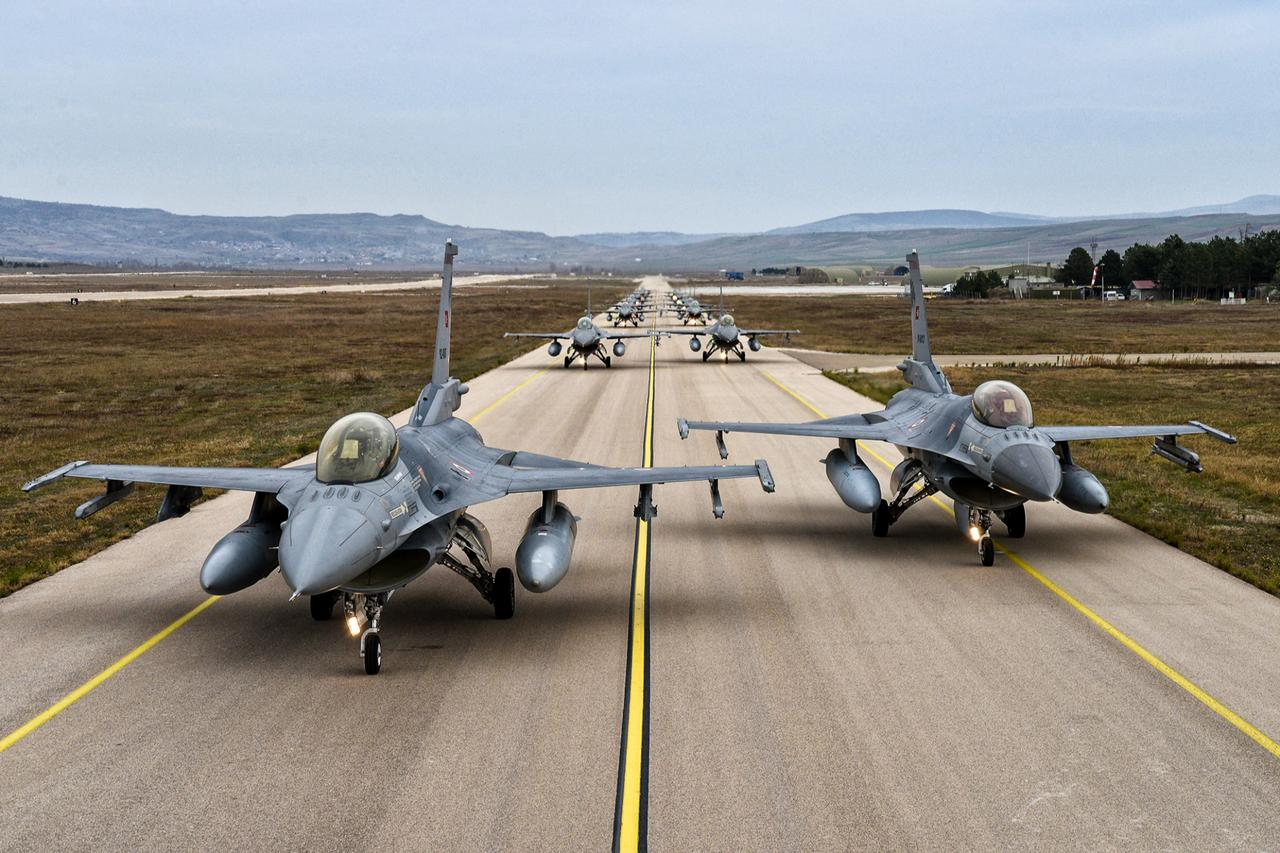
Recent reports indicate that Turkey has deployed F-16 fighter aircraft to Somalia, marking a significant escalation in Ankara’s military posture in the Horn of Africa. The move represents a qualitative upgrade of Turkey’s presence in the country, transitioning from primarily training- and advisory-focused engagement to one that includes advanced airpower capabilities.
The deployment is strategically notable, as it reflects Turkey’s intent to consolidate its role as a long-term security guarantor for Somalia while simultaneously safeguarding expanding political, economic, and energy interests in the region.
Strategic Background: Turkey–Somalia Defense Cooperation
Turkey has maintained a sustained military and political presence in Somalia for over a decade. Since 2017, Ankara has operated Camp TURKSOM in Mogadishu—its largest overseas military facility—where it trains elite Somali army units and provides institutional support to the federal government.
This cooperation has deepened through successive defense agreements, culminating in a long-term security partnership that includes training, equipment provision, intelligence support, and maritime cooperation. Turkish-supplied platforms, including armed UAVs and attack helicopters, have already played a role in counter-insurgency operations against Al-Shabaab. The introduction of F-16 multirole fighters represents a decisive shift toward higher-end military capabilities and signals Ankara’s willingness to assume a more direct deterrent role.
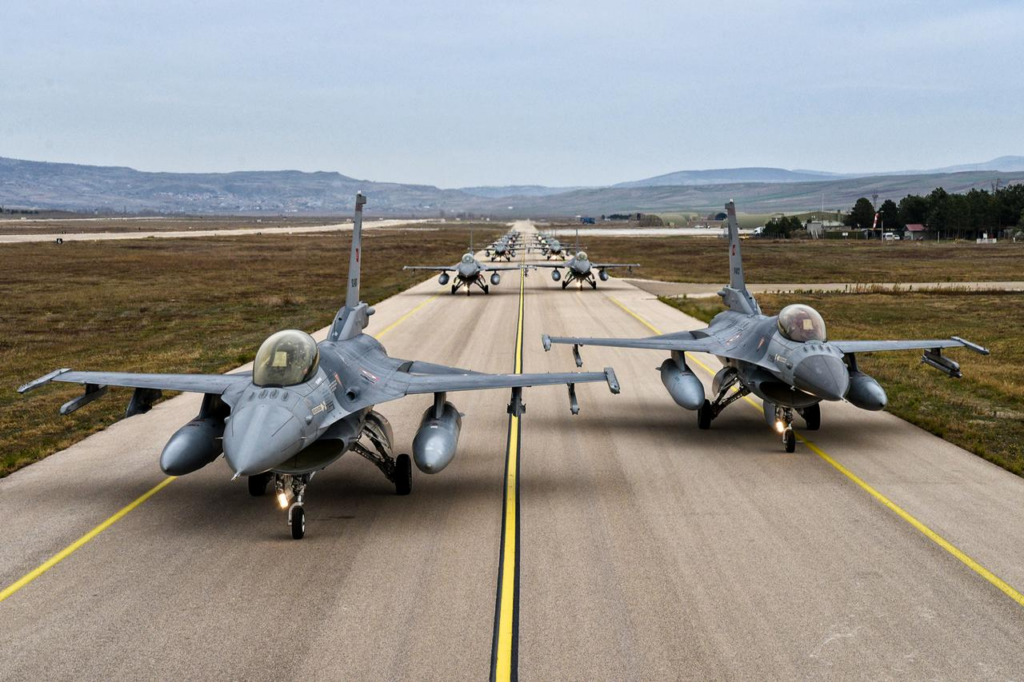
Operational and Military Significance of the F-16 Deployment
According to regional and open-source reporting, multiple Turkish F-16s have been observed operating from facilities in Mogadishu, following infrastructure upgrades at Aden Adde International Airport. These improvements are assessed to support fast-jet operations, including hardened infrastructure, extended runways, and logistical support elements.
From a military standpoint, the presence of F-16s provides Turkey with:
- Rapid reaction and air-dominance capability in a volatile security environment
- Enhanced force protection for Turkish personnel, installations, and investments
- Expanded ISR and precision-strike options, should the security situation deteriorate
While the aircraft are not formally declared as part of an active combat mission, their deployment alone introduces a powerful deterrent effect against both non-state armed groups and potential state-level spoilers.
Strategic Drivers Behind Ankara’s Decision
1. Counter-Terrorism and Regime Stability
Somalia continues to face persistent insurgent threats, particularly from Al-Shabaab, which retains the ability to conduct complex attacks in Mogadishu and beyond. The deployment of advanced air assets enhances Turkey’s ability to support Somali forces in high-tempo security contingencies and reinforces the survivability of the Somali federal government.
2. Protection of Economic and Energy Interests
Turkey has become a major stakeholder in Somalia’s critical infrastructure, including ports, airports, construction projects, and—more recently—offshore energy exploration. As Turkish commercial exposure increases, so does the need for credible military protection, particularly in an environment characterized by asymmetric threats.
3. Geopolitical Competition in the Horn of Africa
The Horn of Africa has emerged as a theater of intensified geopolitical competition involving the United States, Gulf states, Egypt, China, and regional African actors. Turkey’s deployment of F-16s positions Ankara as a hard-power actor rather than merely a development partner, strengthening its leverage in regional diplomatic and security calculations.
4. Signaling and Power Projection
Beyond Somalia itself, the deployment serves a broader signaling function. It demonstrates Turkey’s ability to project advanced airpower well beyond its immediate neighborhood and reinforces Ankara’s image as a rising middle power capable of sustained expeditionary military operations.