Recent satellite imagery and military movements have spotlighted a growing strategic confrontation between the United States and Iran, centered on the latter’s deeply buried nuclear and ballistic missile facilities. On April 2, 2025, Egypt’s Intel Observer (@EGYOSINT) shared satellite images on X, revealing the fortified nature of Iran’s nuclear sites, such as the Fordow Fuel Enrichment Plant near Qom.
These facilities, embedded deep within mountains and beneath the Earth’s surface, are designed to withstand conventional airstrikes, posing a significant challenge to U.S. military capabilities. The images underscore a critical issue: Iran’s nuclear infrastructure, including uranium enrichment and missile development sites, may be beyond the reach of most conventional weapons, prompting discussions about the U.S.’s most powerful non-nuclear option – the GBU-57 Massive Ordnance Penetrator (MOP).
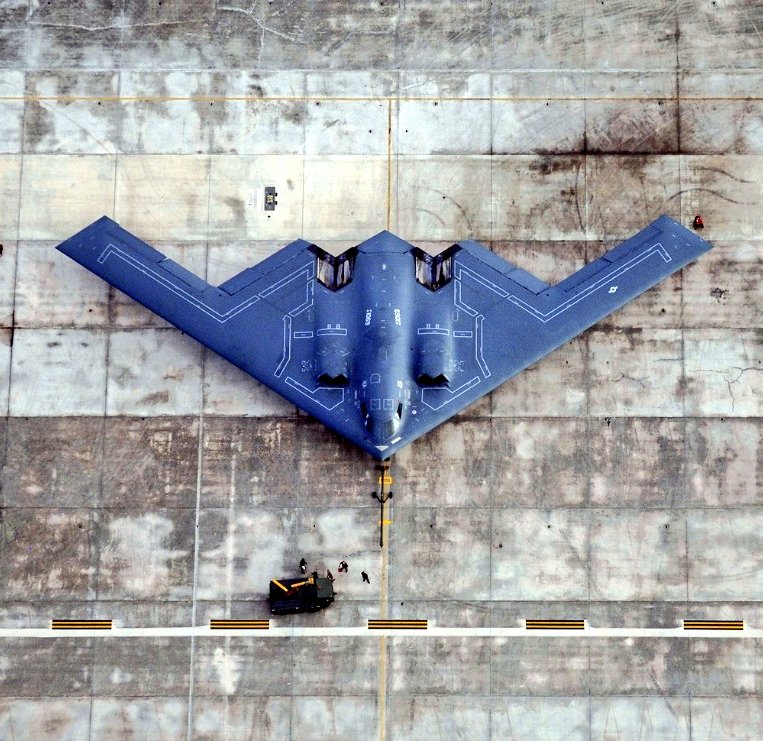
The GBU-57 MOP, a 30,000-pound precision-guided “bunker buster” bomb, is uniquely designed to tackle such hard and deeply buried targets (HDBTs). Capable of penetrating 200 feet of concrete or over 400 feet of soil before detonating its 5,300 pounds of high explosives, the GBU-57 is built for delayed detonation to maximize destruction within fortified structures. However, its deployment is limited to the B-2 Spirit stealth bomber, the only aircraft with the structural capacity to carry it. On the same day as the nuclear site imagery,
@EGYOSINT also shared satellite photos showing six B-2 Spirit bombers stationed at the U.S. – British military base on Diego Garcia in the Indian Ocean. This deployment, representing a significant portion of the U.S. Air Force’s B-2 fleet, signals a potential preparation for operations against Iran, especially given the B-2’s ability to deliver the GBU-57 undetected due to its stealth technology.
The strategic context for these developments is rooted in escalating tensions in the Middle East. Iran’s nuclear program has long been a point of contention, with facilities like Natanz and Fordow drawing international scrutiny for their depth and resilience. A 2024 AP News report highlighted that a new underground facility at Natanz might be beyond the reach of even the GBU-57, raising questions about the effectiveness of U.S. military options.
Meanwhile, the U.S. has been bolstering its presence in the region, as evidenced by the Diego Garcia deployment, which also includes support aircraft like C-17 cargo planes and aerial refueling tankers. This buildup follows a pattern of increased U.S. airpower in the Indian Ocean, amid ongoing conflicts such as the bombing campaign against the Houthis and broader threats involving Iran. The high cost of the B-2 – approximately $2 billion per aircraft – reflects the significant resources the U.S. is willing to commit to maintaining this capability, even as it transitions to the next-generation B-21 Raider.
Public reactions on X to @EGYOSINT’s posts reveal both fascination and concern about the potential for conflict. Users questioned whether Iran could counter the B-2s, possibly with help from China or Russia, or through GPS jamming—a growing concern in modern warfare.
@EGYOSINT dismissed these possibilities, citing U.S. tactics like SEAD/DEAD missions to neutralize enemy air defenses. However, a more pressing issue emerged: if Iran’s bunkers are deeper than the GBU-57’s penetration capability, as some reports suggest, the U.S. may lack a conventional means to destroy them. This limitation, acknowledged by
@EGYOSINT, highlights the broader strategic dilemma. While the U.S. flexes its military might with the B-2 and GBU-57, Iran’s fortified nuclear sites and the specter of escalation—potentially pushing Tehran closer to nuclear weapons—underscore the delicate balance of deterrence, diplomacy, and military action in the region.