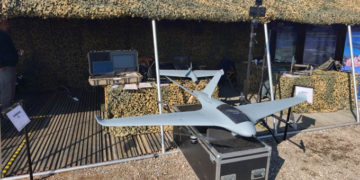
Significant findings include the identification of 3188 Kapro, a cargo company facilitating these shipments, with its name and phone number visible on packing tape and in the background of related media. The thread further uncovers that 3188 Kapro, despite claiming to be a large operation with sister companies like Izumi Commercial Company and Izumi International Supply Chain Management, was a small “hole-in-the-wall” business as recently as 2017, according to historical street view photos.
This discrepancy suggests that the ongoing Russia-Ukraine war has significantly boosted its operations, as the company has since moved to a larger high-street location. The investigation also highlights the broader ecosystem, noting over 100 similar “карго” (cargo) companies in the area, all exporting Chinese-made goods to Russia, Ukraine, Kazakhstan, and Turkey, often supplying both sides of the conflict for profit.
The thread delves into the operational details, revealing how PGI Technology and 3188 Kapro maintain a close working relationship, though they are likely separate entities rather than being owned by the same person. A notable point of concern is the presence of Russian signage and the “China and Russia Parlor” at 3188 Kapro’s premises, indicating strong ties with Russian clients.
The investigation also questions the legitimacy of 3188 Kapro’s claims of large-scale production, as at least one photo of their facilities was found to be pilfered, casting doubt on their actual capacity. This suggests a possible front for smaller-scale operations that have scaled up due to the war’s demands, capitalizing on the conflict to export military and dual-use goods to Russia, despite international efforts to curb such activities.
The broader implications of this supply chain are stark, as DanielR concludes that Chinese-made equipment likely plays a significant role in the Russia-Ukraine war, with companies like 3188 Kapro profiting by supplying both sides. The thread underscores the complexity of tracking such operations, noting the use of multiple company names and sister entities to obscure activities, a process that required extensive research to unravel.
This investigation not only highlights the challenges of enforcing sanctions but also calls attention to the thriving underground networks that sustain modern warfare, urging further scrutiny into the volume of Chinese exports fueling the conflict and their impact on global security dynamics.