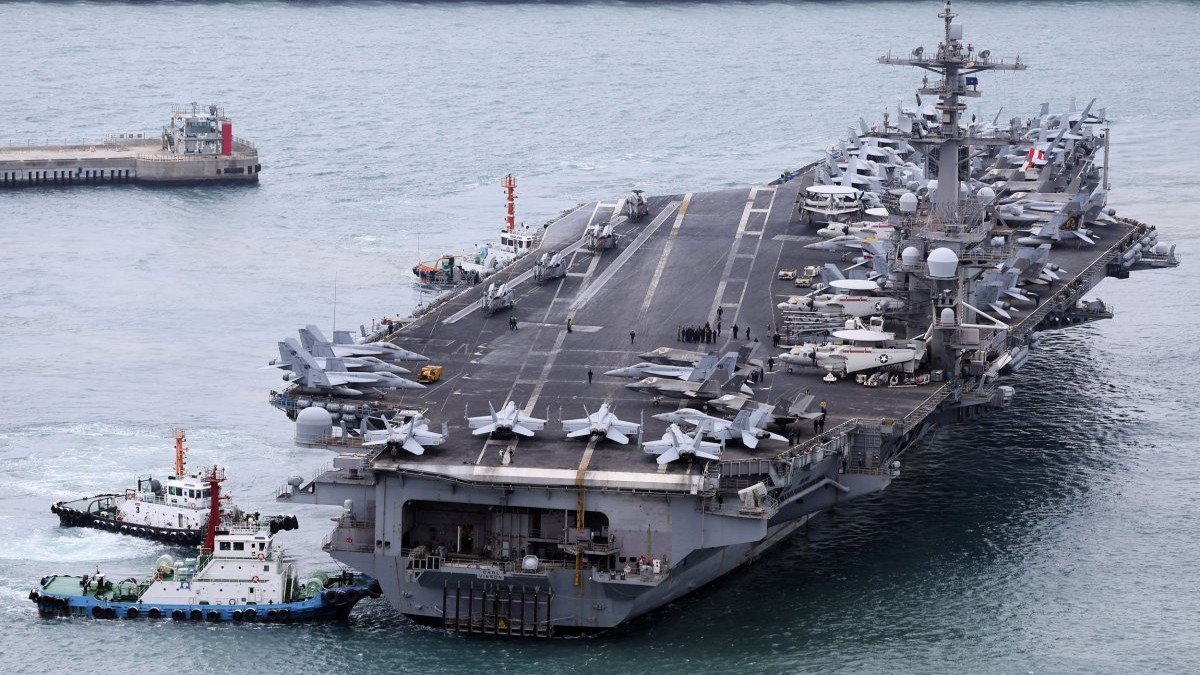
On Thursday, the U.S. military confirmed the arrival of a second aircraft carrier, the USS Carl Vinson, in the Middle East, bolstering its operational presence in a region marked by heightened geopolitical volatility. The deployment, described as part of efforts to safeguard commercial shipping lanes, coincides with an ongoing U.S.-led campaign of intensive airstrikes targeting Iran-backed Houthi rebels in Yemen.
The USS Carl Vinson, equipped with a combat wing that includes advanced low-observable F-35 fighters, joins the USS Harry Truman under the U.S. Central Command (CENTCOM), which oversees military operations across the Middle East. CENTCOM announced the deployment via a statement on X, though it did not specify the precise location of the carrier strike group. The Houthis have repeatedly claimed responsibility for attacks targeting the USS Harry Truman and its accompanying strike group, signaling their intent to challenge U.S. naval dominance in the region.
The U.S. escalation follows a sharp increase in Houthi attacks on commercial vessels, which began roughly a month after the outbreak of the Israel-Hamas war in Gaza on October 7, 2023. The Houthis, who control significant territory in Yemen, have justified their maritime campaign as an act of solidarity with the Palestinian cause, targeting vessels they associate with Israel and its primary ally, the United States. The group’s actions have disrupted critical shipping routes, particularly in the Red Sea, prompting a robust U.S. response.
Since mid-March, U.S. forces have conducted airstrikes on over 100 Houthi-controlled targets, according to a U.S. official speaking on Wednesday. These strikes mark the latest phase of a sustained air campaign aimed at degrading the Houthis’ military capabilities, including their arsenal of drones, missiles, and coastal defenses. The Houthis’ alignment with Iran has amplified concerns in Washington, with President Donald Trump declaring in mid-March that Iran would be held “responsible” for every Houthi attack, framing Tehran as the ultimate orchestrator of the group’s actions.
The deployment of a second carrier strike group underscores the U.S. commitment to maintaining freedom of navigation and deterring further Houthi aggression. However, it also risks deepening the cycle of retaliation, as the Houthis have shown resilience in the face of sustained bombardment. The broader regional context—marked by the Gaza conflict and Iran’s support for proxy groups—complicates the U.S. strategy, raising the specter of a wider confrontation. For now, the USS Carl Vinson’s arrival signals Washington’s intent to project power, but the path to de-escalation remains uncertain.