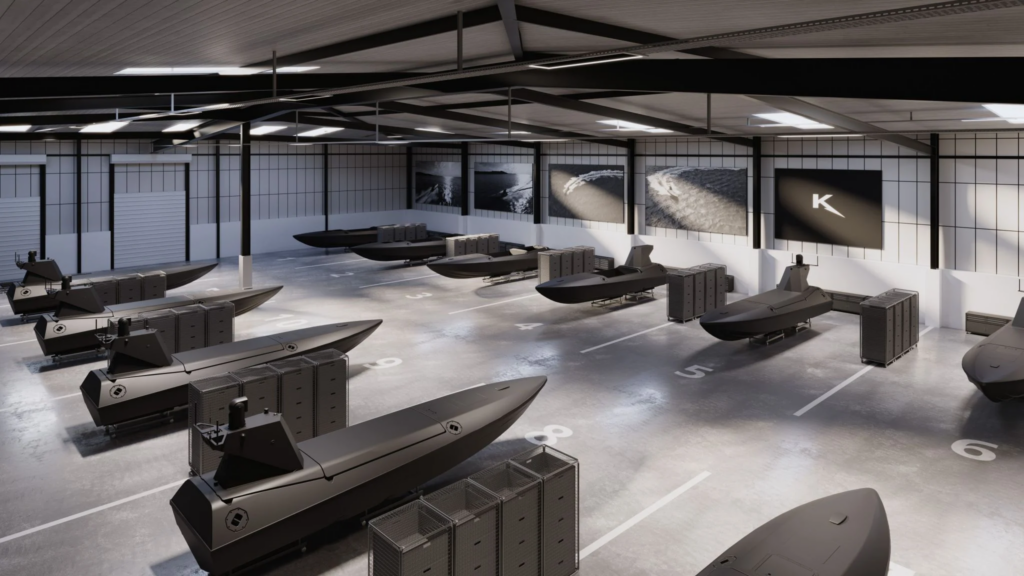
Kraken Technology Group’s recent announcement that its AREA 1 manufacturing facility is fully operational marks a significant advancement in the production of next-generation uncrewed maritime systems. With an annual output exceeding 500 units and plans for additional production lines in 2025, Kraken is positioning itself as a pivotal player in the evolving landscape of naval warfare and maritime operations. As a retired colonel with over three decades of experience in military strategy and technology integration, I view this development as a critical step toward enhancing operational flexibility in contested domains – particularly in the Indo-Pacific theater.
Kraken’s statement underscores a pragmatic approach: “No smoke, no mirrors, only high-performance, low-cost, production-ready capabilities at scale—today.”
This reflects not only industrial maturity but also an alignment with the pressing demands of modern naval forces for scalable, cost-effective solutions. The company’s flagship platforms—the K3SCOUT and K4 MANTA – offer distinct yet complementary capabilities tailored to a spectrum of missions, from commercial logistics to high-stakes military operations.
K3SCOUT: Agile and Discreet
The K3SCOUT, an autonomous uncrewed surface vessel (USV), is engineered for low-cost deployment with a minimal detectable signature. Its design prioritizes agility and operational adaptability, making it ideal for tasks such as perimeter defense, maritime surveillance, and logistics support in complex littoral environments. The vessel’s compact form factor and quiet propulsion system enhance its suitability for operations in contested near-shore waters, where stealth and maneuverability are paramount.
For military planners, the K3SCOUT represents a force multiplier capable of augmenting traditional naval assets without the vulnerabilities of manned systems.
K4 MANTA: A Hybrid Game-Changer
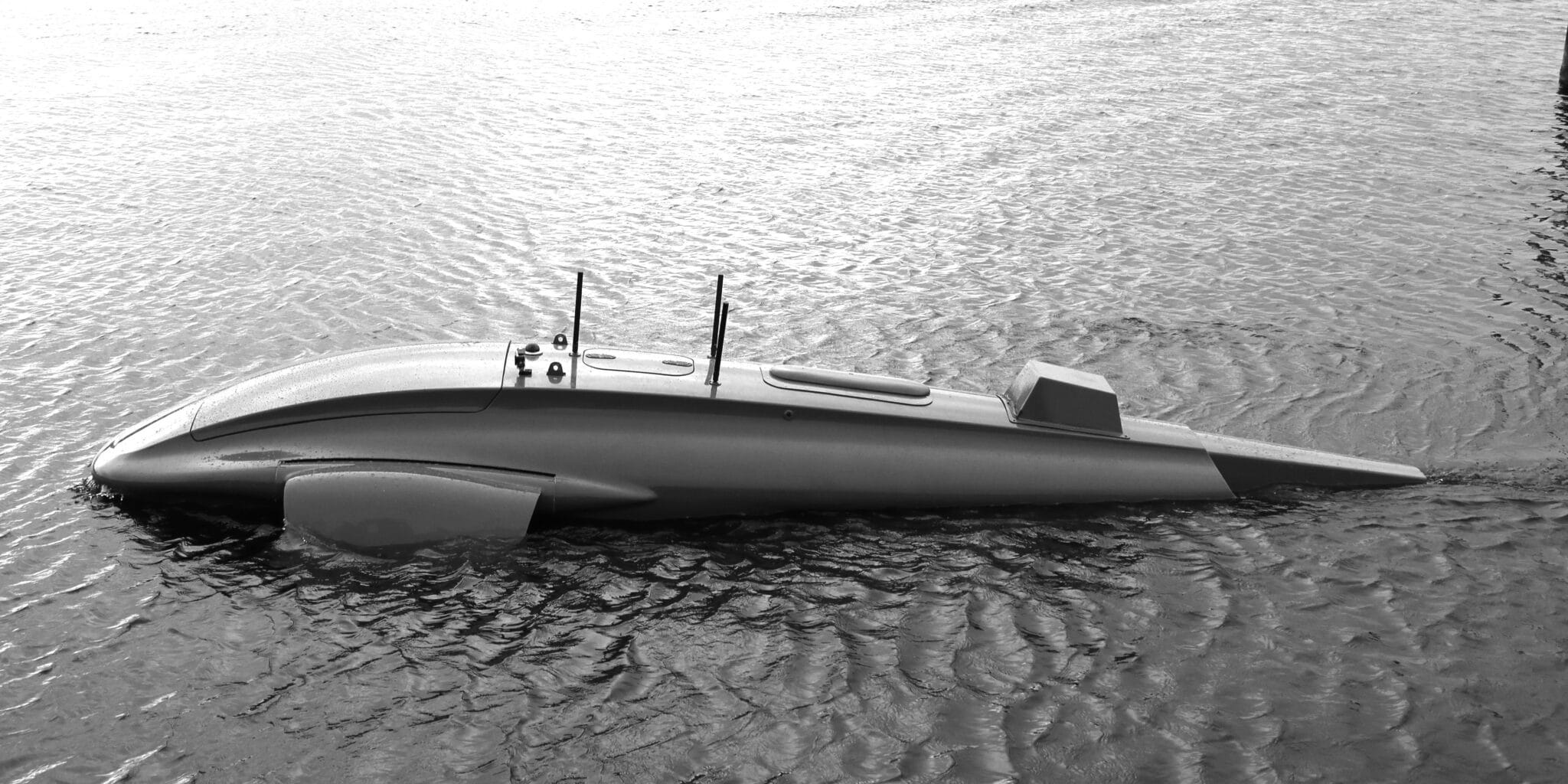
The K4 MANTA elevates Kraken’s portfolio with its hybrid surface-subsurface vehicle (USSV) configuration. This platform integrates high-speed surface transit with limited submerged operations, enabling a versatile mission set that includes intelligence, surveillance, and reconnaissance (ISR), precision strikes, and special operations.
Described as a “foiling uncrewed surface-subsurface vehicle,” the MANTA leverages hydrodynamic efficiency for rapid surface movement while retaining the ability to submerge for covert approaches. This dual-mode capability introduces a new tactical dimension, allowing operators to exploit both the surface and subsurface domains—a critical advantage in anti-access/area denial (A2/AD) environments.
Strategic Implications
From a military perspective, these systems address key operational challenges in the Indo-Pacific, where vast littorals, archipelagic waters, and contested maritime zones dominate the strategic landscape.
he K3SCOUT’s affordability and scalability enable distributed operations, aligning with the U.S. Navy’s concept of Distributed Maritime Operations (DMO), which emphasizes dispersed, networked forces to counter adversary A2/AD strategies. Meanwhile, the K4 MANTA’s hybrid design offers a low-observable platform for penetrating defended areas, supporting special forces insertions or precision engagements with reduced risk to personnel.
Kraken’s production milestone at AREA 1 arrives at a time when regional powers are intensifying their focus on uncrewed systems to deter aggression and secure maritime domains. The scalability of these platforms suggests potential for rapid integration into allied fleets, enhancing coalition interoperability—a cornerstone of Indo-Pacific security frameworks.
Military Doctrine in the Indo-Pacific: Distributed Maritime Operations (DMO)
The technology embodied by Kraken’s K3SCOUT and K4 MANTA aligns closely with the U.S. Indo-Pacific Command’s adoption of Distributed Maritime Operations (DMO). This doctrine emphasizes the use of dispersed, networked, and resilient forces to complicate adversary targeting and maintain operational tempo in contested environments.
By leveraging low-cost, autonomous systems like the K3SCOUT for persistent surveillance and the K4 MANTA for hybrid strike and ISR roles, DMO enables a shift from concentrated, high-signature naval formations to a more agile, distributed posture. This approach is particularly suited to countering the People’s Liberation Army Navy (PLAN) and its A2/AD capabilities across the Indo-Pacific’s critical sea lanes.