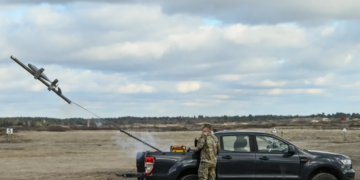
This is a part of a Defense Intelligence Report about V-BAT UAS and China’s military capabilities.
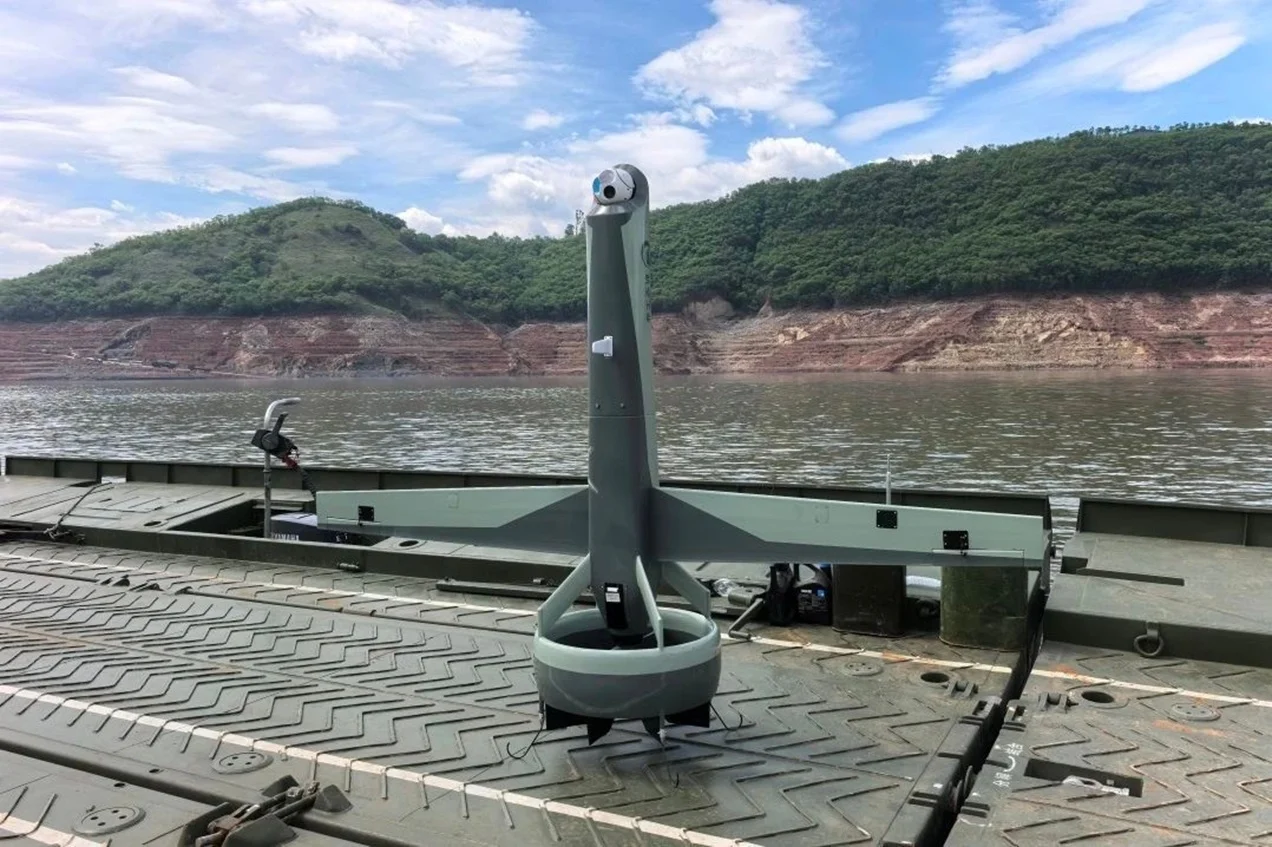
The People’s Republic of China has publicly unveiled a new indigenously developed Vertical Take-Off and Landing (VTOL) tail-sitter unmanned aerial vehicle (UAV) during a mountainous plateau disaster relief exercise in Sichuan Province. The system was showcased by state-controlled media and confirmed by South China Morning Post reporting, marking its first known operational debut in a civilian-focused mission profile.
Technical Specifications (As Publicly Disclosed)
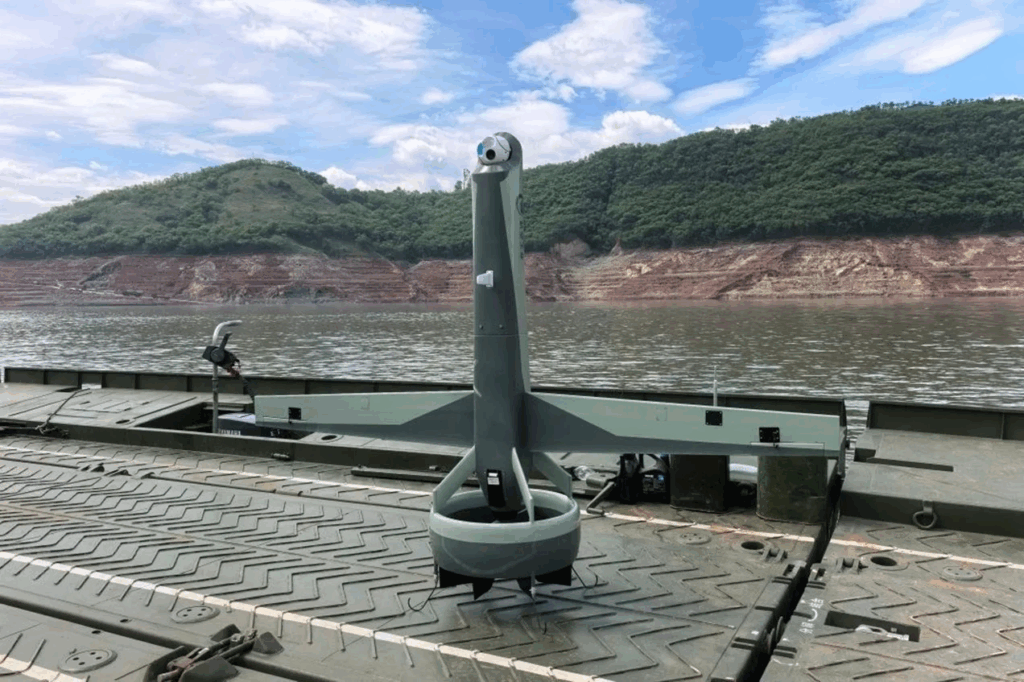
- Wingspan: 2.6 meters
- Height: 1.8 meters
- Propulsion: Single ducted-fan engine
- Sensor Suite: Gimbal-mounted EO/IR system (infrared + visible light cameras)
- Flight Profile: Tail-sitter configuration with vertical take-off/landing and efficient horizontal cruise
- Performance: Greater horizontal speed than conventional quadrotors
- Primary Role: Rapid response, ISR (intelligence, surveillance, reconnaissance), and disaster relief missions
Design & Modularity
The drone’s modular payload design allows operators to tailor the system to mission-specific needs, with swappable modules for:
- Optical and thermal surveillance
- Environmental or chemical sensors
- Smoke or light-based signaling devices for disaster response
The UAV operates on CAIG’s Wenyao autonomous flight control platform, which integrates:
- AI-based mission planning
- Obstacle avoidance
- Swarming capabilities
V-BAT Comparison: Architectural Similarities
Open-source analysts have highlighted striking design parallels with the V-BAT UAV, developed by Shield AI (U.S.). Key similarities include:
- Ducted-fan propulsion
- Tail-sitter launch and hover design
- Compact, vertical-stored architecture
Despite these resemblances, differences in size, configuration, and application scope suggest that the Chinese platform is inspired by, rather than a direct replica of, the V-BAT. The new Chinese UAV appears optimized for short-duration ISR and rapid-deployment tasks, whereas V-BAT is designed for longer-range, expeditionary operations.
Strategic Assessment
This development aligns with the PRC’s increasing emphasis on dual-use UAV technologies that blur the line between military-grade platforms and civil emergency tools. It reflects:
- Continued effort to replicate and adapt Western UAV innovations
- Strategic focus on AI-enabled autonomy and modularity
- Potential future export orientation toward emerging markets in Asia and Africa
As China enhances its tail-sitter UAV ecosystem, Western defense stakeholders—particularly those invested in expeditionary or naval VTOL ISR systems—should monitor closely for further iterations, field deployments, and proliferation beyond domestic use.
Ρώτα το ChatGPT